What Are Some Common Terms Used in Commercial Roofing in Pittsboro?
If a roofer's proposal for your building reads like a foreign language, this short glossary will help you follow along and ask better questions.
What are some common terms used in commercial roofing?
The most common commercial roofing terms describe the roof type (low-slope, membrane, TPO, EPDM, modified bitumen), the edges and openings (flashing, parapet, coping, penetrations), how water leaves (scuppers, drains, crickets, ponding) and the work itself (tear-off, recover, core cut). Knowing them makes any estimate easier to read and compare. Questions? Reach us at (919) 980-9943.
Words that describe the roof itself
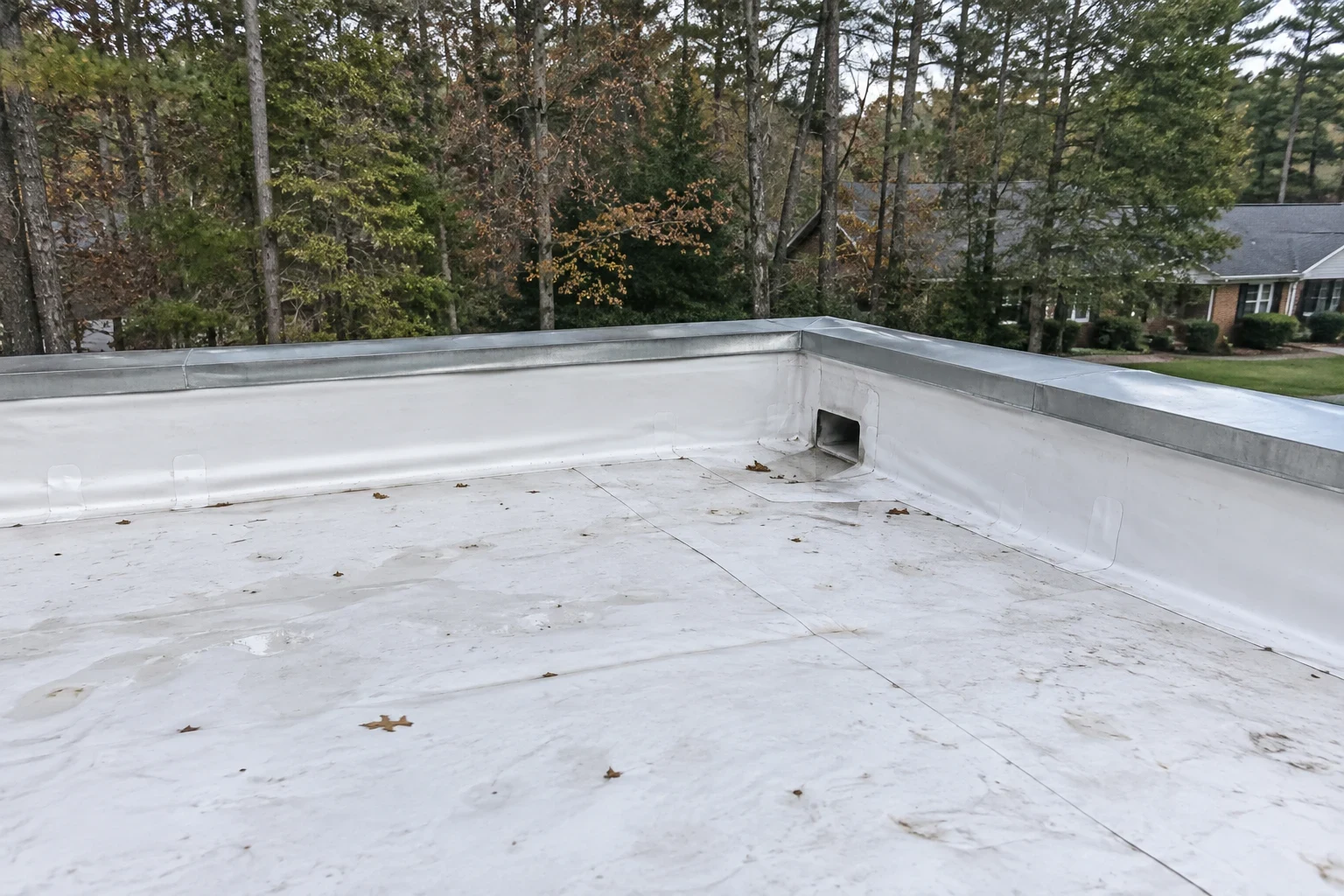
Most commercial buildings have a roof that looks flat from the street but is not truly flat. Roofers call it low-slope, and it is covered with a membrane or a layered system instead of shingles. The type of membrane is usually the first line of any proposal, so it helps to know the main ones.
Under the membrane sits insulation and a cover board, all resting on the roof deck. When we look at an older building, the condition of those hidden layers often matters more than the surface you can see.
- Low-slope: a roof with very little pitch, built to shed water slowly toward drains or edges.
- TPO: a white, single-ply membrane whose seams are joined with hot air into one solid sheet.
- EPDM: a black rubber membrane, often called a rubber roof, with seams joined by tape or adhesive.
- Modified bitumen: asphalt-based rolls, often torched or self-adhered, common on smaller buildings.
- Built-up roof (BUR): alternating layers of felt and asphalt, often topped with gravel.
- Polyiso and cover board: the rigid insulation and the thin protective board that go between the deck and the membrane.
Edges, walls and openings: where most leaks start
The open middle of a commercial roof, called the field, rarely leaks on its own. Trouble tends to start where the membrane meets something: a wall, an edge, a pipe or an HVAC unit. These terms come up in nearly every repair conversation.
This is where we spend the most time on any job. Flashing that runs high enough up a wall, a termination bar fastened at the right spacing and sealant applied to clean, dry surfaces are small details, but they decide whether the repair lasts through years of summer heat and heavy thunderstorm rain.
- Flashing: membrane or metal that turns up and seals the joint where the roof meets a wall or curb.
- Parapet and coping: a parapet is the short wall around the roof edge; coping is the metal cap that keeps water out of its top.
- Termination bar and counterflashing: a metal strip that clamps the top of the flashing, and a second metal piece that covers it.
- Penetration: anything that passes through the roof, like vent pipes, conduit or exhaust fans.
- Curb and pitch pan: a raised frame under rooftop equipment, and a sealed pocket around odd-shaped penetrations.
How water moves off the roof
Because a low-slope roof drains slowly, the drainage terms on a proposal deserve a close read. Ponding is water that sits for more than a day or two after rain. It wears membranes faster, adds weight to the structure and finds any weak seam.
Fixes often involve reshaping the surface so water moves where it should. That might mean tapered insulation, which is cut with a built-in slope, or a cricket, a small peaked section that steers water around an obstacle like a rooftop unit. On buildings with gutters along one edge, the gutter size and outlet spacing matter as much as the roof itself.
- Scupper: an opening through a parapet wall that lets water drain off the side.
- Internal drain: a drain set in the roof field that carries water down through pipes inside the building.
- Overflow drain: a backup outlet, set slightly higher, that works if the main drain clogs.
- Cricket and tapered insulation: built-up slopes that move water toward drains instead of letting it pool.
Terms you will see on an inspection report or estimate
When we inspect a commercial roof, the report describes both what we found and what we recommend. A core cut is a small sample removed to see how many layers exist and whether the insulation is wet. An infrared scan uses heat differences, usually after sundown, to map trapped moisture across a large area.
The two big repair paths are tear-off and recover. A tear-off removes everything down to the deck. A recover installs a new membrane over the existing roof, which is only an option when the old layers are dry and building code allows another layer. Wet insulation under a new membrane just traps the problem, so we check before recommending a recover.
You may also see a restoration coating offered as a middle option. It can extend the life of a sound membrane, but it does not fix wet insulation or failed flashing. Every recommendation we make comes with photos so you can see the reason behind it.
- Fully adhered: the membrane is glued down across its whole surface.
- Mechanically attached: the membrane is held with fasteners and plates along the seams.
- Ballasted: the membrane is held down by the weight of stone or pavers.
- Seam probe: running a tool along heat-welded seams to find gaps before they leak.
More questions about commercial roofing terms
What does R-value mean on a roofing proposal?
R-value measures how well the insulation resists heat flow. A higher number means better insulation, and the number listed often depends on the thickness of polyiso used under the membrane.
Is a white roof the same as a cool roof?
Mostly, yes. A cool roof reflects more sunlight than a dark one, which can keep the space below cooler during long North Carolina summers. White TPO and reflective coatings are the usual choices.
Why does the estimate list flashing separately from the membrane?
Flashing at walls, curbs and penetrations is detailed hand work and varies a lot from building to building. Listing it on its own line shows you where the labor goes and makes estimates easier to compare.
Do these terms matter on a small building with a low-slope section?
They do. Many homes and small shops around Pittsboro have a flat porch or addition roof that uses the same membranes, flashing and drainage details as a larger commercial roof.
See what is really going on up on your roof
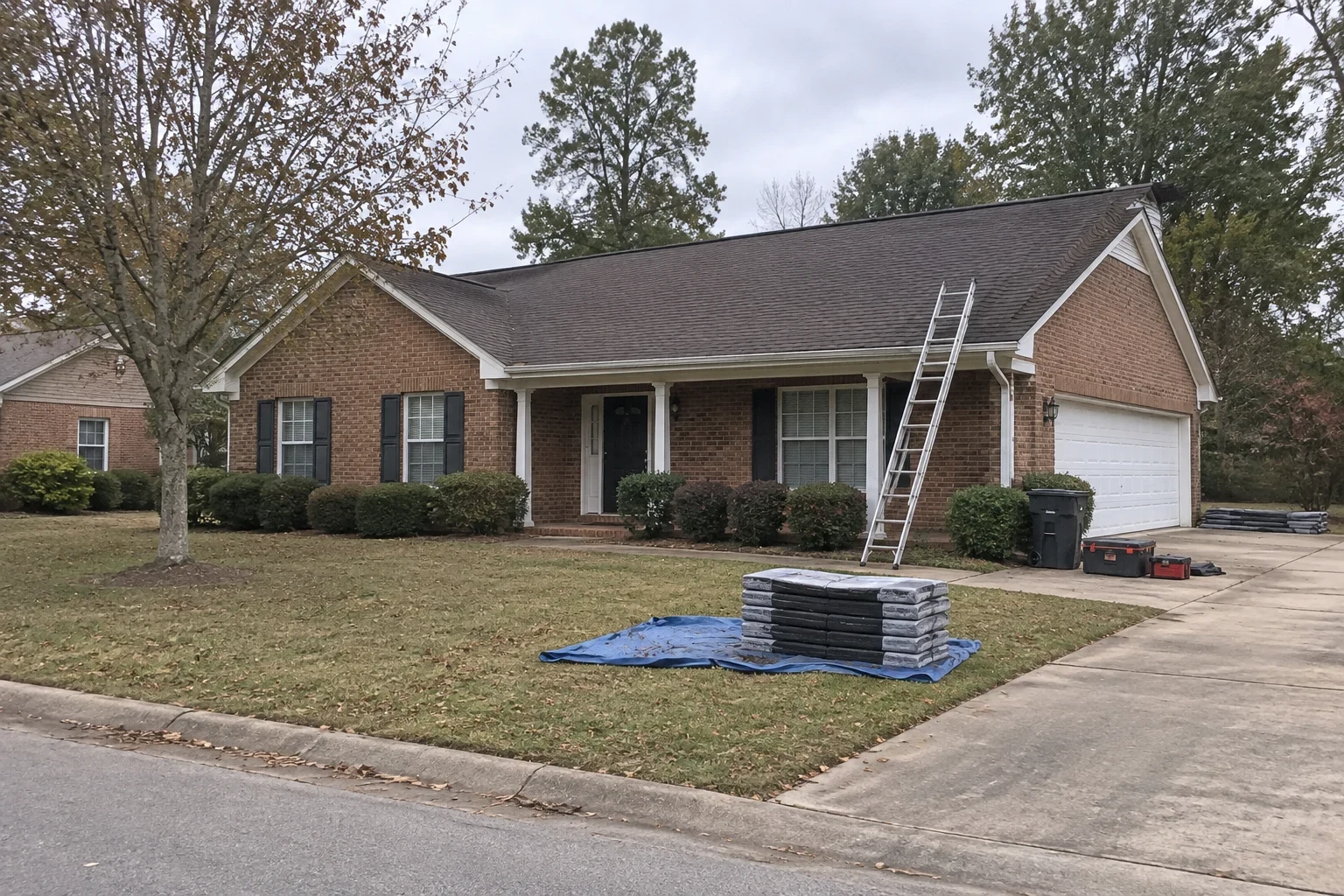
Give us a call to set up a free roof inspection. We walk the roof, check the seams, flashing and drains, and send you a photo report of what we found, explained in plain terms.