ServicesSiding
Pittsboro Siding Repair and Replacement
New siding only lasts as long as what sits behind it. We fix and install vinyl and fiber cement with close attention to the house wrap, the flashing around windows and rooflines, and how every panel is nailed. It all starts with a free inspection and a photo report.
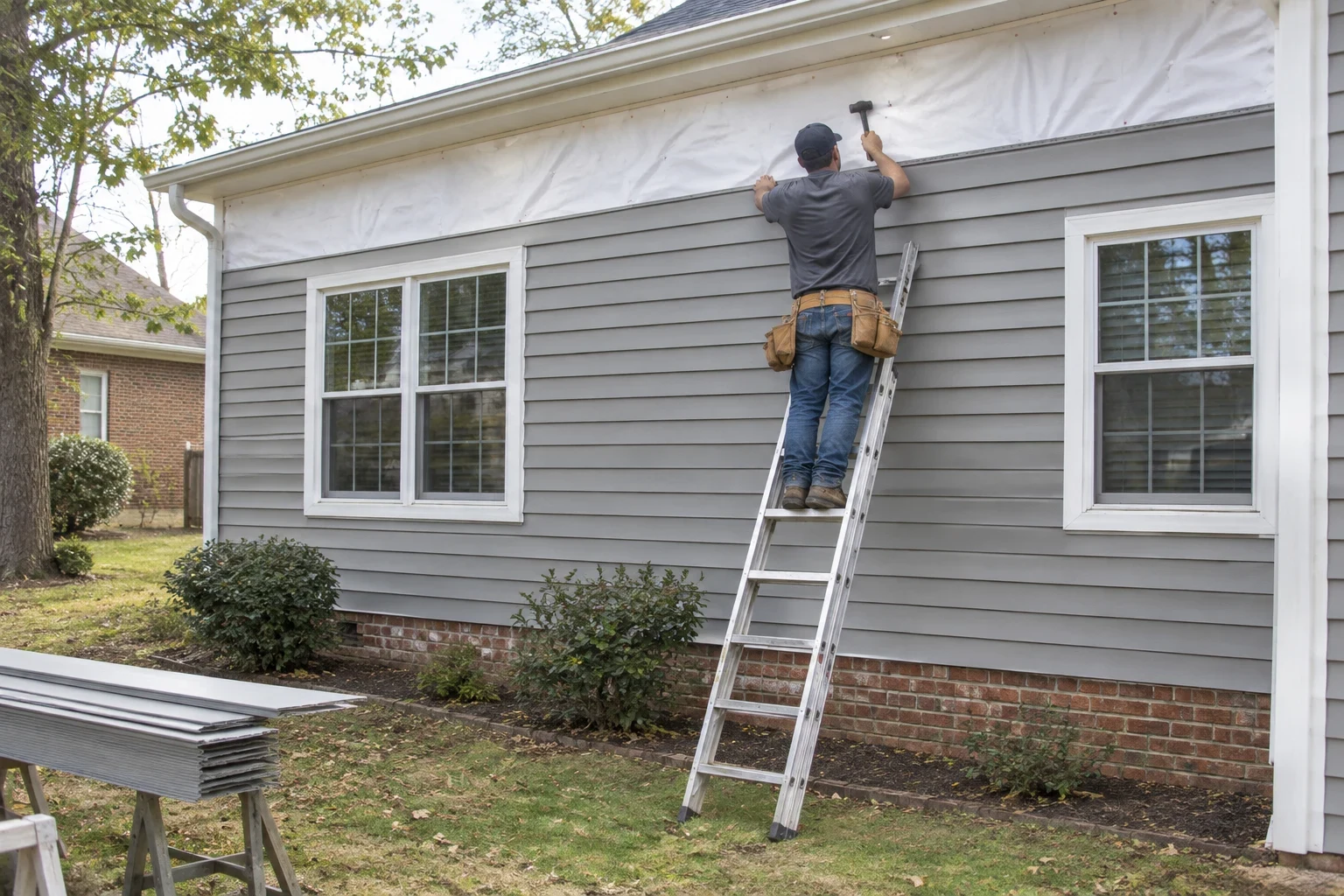
Siding that keeps water out of your walls
Siding is the outer layer of a system. Behind it sits a weather barrier, and around every opening sits flashing that sends water back outside. When siding fails, it is usually because one of those layers was skipped or put on backward, not because the panels themselves wore out.
Some homes only need a section repaired after wind or a falling limb. Others have soft sheathing, swollen trim or a weather barrier that was never lapped correctly, and patching over that just hides the problem. We look at both before recommending anything, and we tell you plainly which one you have.
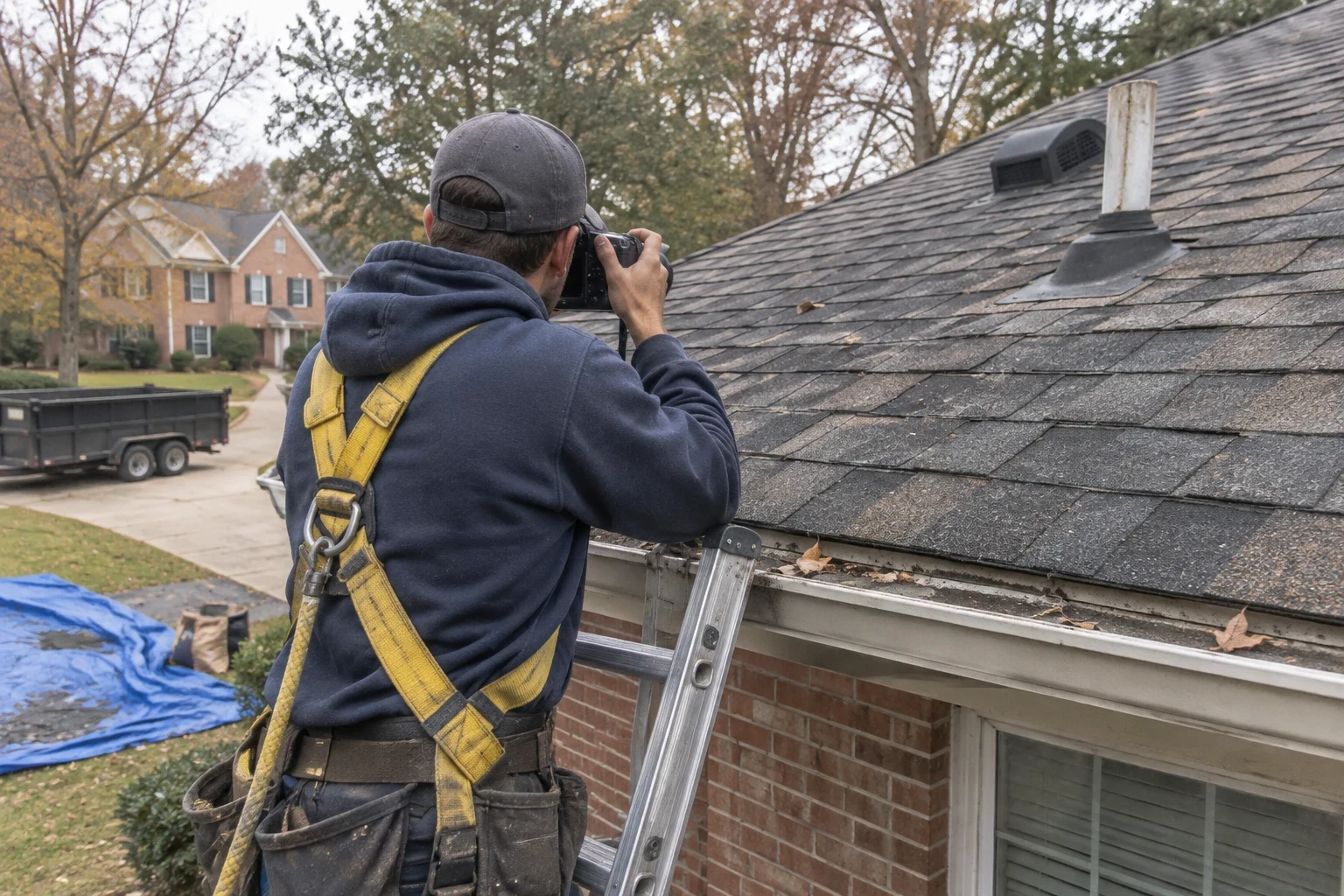
Siding work often meets the roof, so we pay close attention where the two join. If the inspection turns up a roof issue along the way, we note it in the photo report so you can decide about roof repair on your own schedule.
What our siding work includes
Removal down to the sheathing
When we replace siding, the old material comes off so we can see the wall beneath it. Soft or water-stained sheathing is photographed and swapped out before any new layer goes up.
Weather barrier lapped the right way
We hang house wrap like shingles, each higher sheet overlapping the one below, so water sliding down the wall never finds its way behind a seam. Every seam gets taped, and the wrap sits beneath window and door flashing, never on top of it.
Kick-out and step flashing at the roofline
Wherever a roof edge ends against a wall, we add a kick-out flashing that sends water into the gutter rather than down the siding. It is a modest piece of metal, yet its absence is behind many of the rotted walls we open up.
Vinyl fastened to move
Vinyl expands in summer heat and contracts on cold nights. Each nail goes through the middle of its slot and stops just short of snug, and panel ends get a small gap, so the siding slides freely rather than rippling.
Fiber cement with proper clearances
Fiber cement can draw up moisture if it sits too close to a roof or the soil, so we leave the required gap at both. We also flash behind butt joints and use factory-finished boards with matching trim.
Cleanup and a final walk-around
A magnet sweep gathers stray nails, the old siding is hauled off, and we walk around the house with you before we pack up.
Signs your siding needs attention
- Warped or buckled vinyl
- Wavy panels usually mean they were nailed too tight. They tend to keep pulling loose and can let rain in behind them.
- Soft spots or swollen trim
- Press on trim near windows and the bottom of walls. If it feels spongy, water has been getting behind it for a while.
- Stains below a roof edge
- Dark streaks running down the wall under a roofline often point to a missing kick-out flashing. Thick summer humidity keeps those spots damp longer, so rot follows quickly.
- Cracked, loose or missing pieces
- Hail, wind and stray limbs crack vinyl and chip fiber cement. Even one missing piece exposes the wrap to sun and rain.
- Peeling paint or bubbling inside
- Blistering paint or a musty smell on an interior wall can trace back to a leak in the siding outside.
How a siding job runs
- 1
Free inspection and photo report
We go around every side of your home, look over trim and flashing, and probe anything that seems soft. You receive photos of our findings along with a written, line-by-line estimate.
- 2
Choosing material and color
We talk through vinyl and fiber cement together, including long-term ownership cost and how each one copes with heat and moisture. If a storm caused the damage, we can be on site when the adjuster comes out and walk you through each part of filing the claim.
- 3
Protecting your home
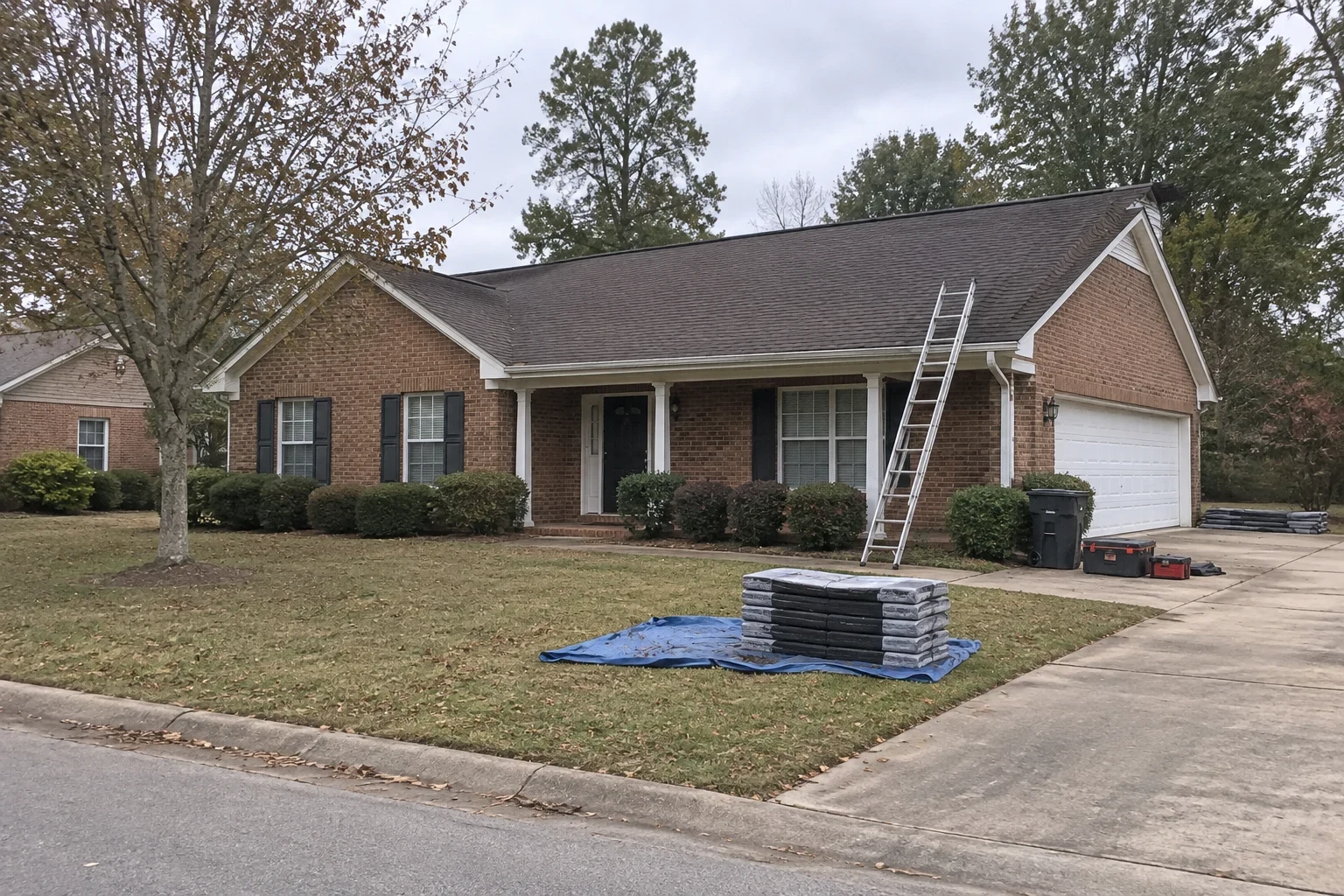
Tarps go down over flower beds and walkways before tear-off, and we move anything in the way. Each wall section is wrapped and closed up before we stop for the day, so no bare sheathing sits out in the rain.
- 4
Install, inspect and clean up
Wrap goes on first, then flashing, then siding, and we check every wall before starting the next one. At the end we clear the yard and look over the finished work with you.
What moves the price of a siding job
No two siding estimates look alike, because each depends on your house and on what turns up once the old material comes off. Our estimate breaks the work into separate lines so every charge is easy to follow. If spreading out the cost would help, financing is available through Acorn Finance.
- Wall area and number of stories
- Bigger walls take more panels and more hours. Second-story work and sloped yards call for extra staging and slow the pace.
- Vinyl or fiber cement
- Vinyl is usually the less expensive install. Fiber cement carries a higher upfront cost and needs more careful cutting and fastening.
- What the sheathing looks like
- Any rotted sheathing or framing must be fixed before new siding goes up. You see the photos first, before that work ever lands on your estimate.
- Windows, doors and trim
- Each opening, vent and outside corner gets flashed and trimmed by hand. So a wall with many windows and doors takes longer to side than a plain wall of equal size.
Siding questions we hear often
- Can you repair just a few damaged pieces?
- In many cases, yes. When the damage is contained and the wall underneath is solid, we swap out only the affected panels. Older or sun-faded colors can be hard to match, so we show you how close the new pieces will look before you commit.
- Should I choose vinyl or fiber cement?
- Vinyl is the lower-cost option and needs very little upkeep, though it shifts with temperature and hail can crack it. Fiber cement is heavier, stands up well to impact and fire, and has to be installed with proper clearances to stay dry. We compare the two with you and suggest what suits your home and your budget.
- Is storm damage to siding covered by insurance?
- Wind and hail damage frequently is, but it comes down to your policy. We photograph every damaged area, can be there when your adjuster visits, and help you with each step of the claim. The coverage decision belongs to your insurance company.
- Will you need to go inside my home?
- The work itself is done from the outside. If there are signs of a leak, we may ask to see the affected interior wall, but the installation never moves indoors.
- Do you work outside Pittsboro?
- We do. Our crews also handle siding in Briar Chapel, Fearrington Village, Apex, Chapel Hill, Sanford, Carrboro and Siler City.
See your walls the way we see them
Our siding inspection is free, and afterward you get photos of everything we found, the good news included. What happens next is entirely your call.