ServicesRoof Inspections
Roof Inspections in Pittsboro, NC
We check the small things that decide how long a roof lasts: nail heads, pipe boots, step flashing, valley shingles and the attic underneath. You get a photo report showing what we found, what can wait and what shouldn't, explained in plain words.
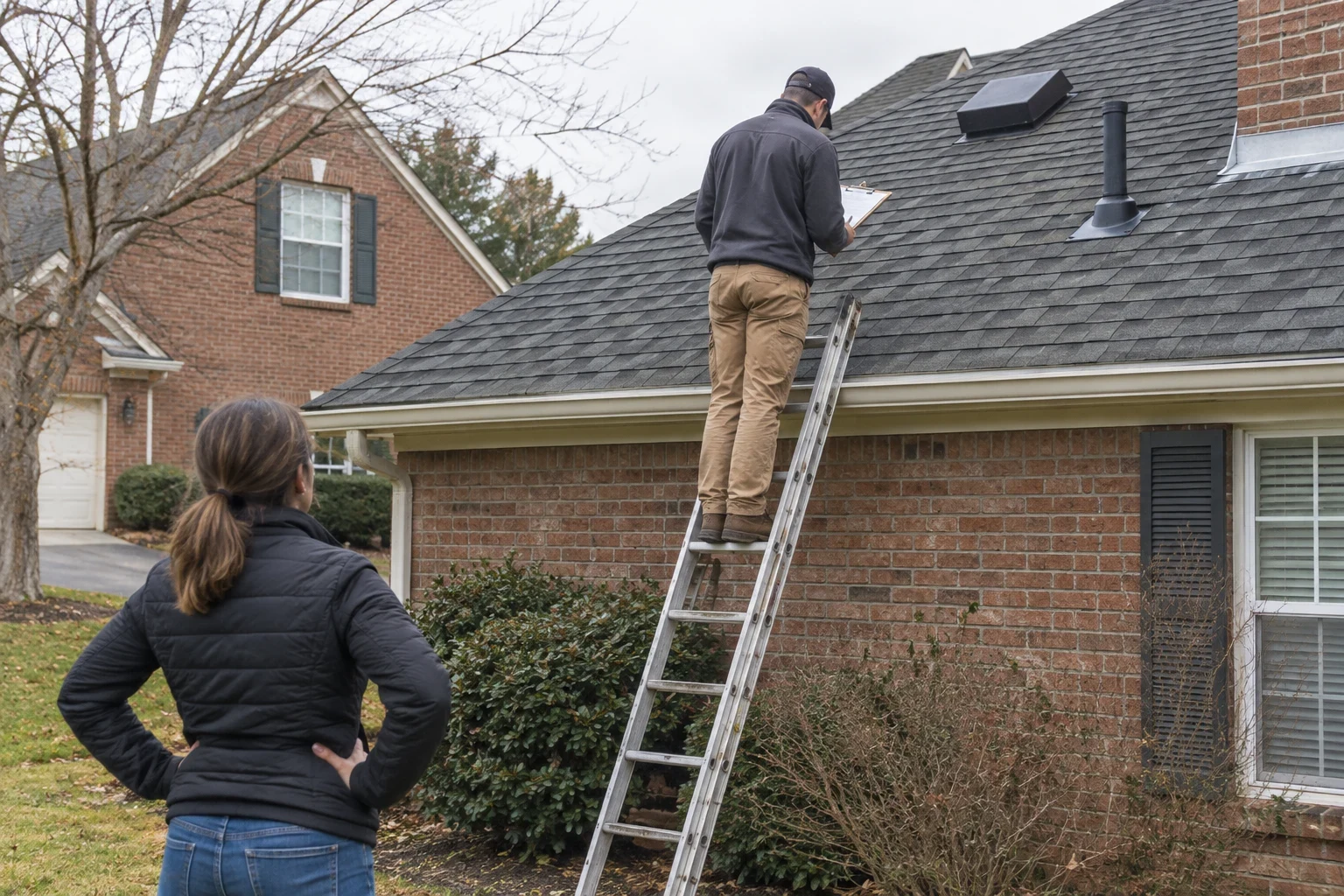
A roof inspection that shows you, not just tells you
Most roof problems start small. A cracked rubber boot around a vent pipe, a few nails backing out, a gap where the flashing meets a chimney. None of that is visible from the yard, and once a brown spot finally appears indoors, the leak behind it has often been working on the decking for months.
Our inspection is built around those details. We get on the roof, look closely at the spots where roofs actually fail, then check the attic for the other half of the story. Each finding is photographed, so the evidence is in your hands and every decision about your home stays yours.
Some homeowners call us before buying or selling, some after a rough storm season, and some just because the roof is getting older and they'd rather know. Any of those is a good reason.
What we check on every inspection
Shingle condition and granule loss
We look for curling, cracking, missing tabs and bare patches where the protective granules have worn away. A heavy layer of grit in your gutters tells us something too, so we look there as well.
Flashing at walls, chimneys and valleys
Flashing is where most leaks begin. We make sure step flashing overlaps the right way, that counterflashing is properly sealed into the masonry and that valleys are free of cracks and packed debris.
Pipe boots, vents and fasteners
Rubber pipe boots crack in the summer sun long before the shingles wear out. We also look for exposed or popped nail heads, which let water follow the nail straight into the deck.
Attic, decking and ventilation
From inside, we look for pinholes of daylight, water marks on rafters, matted insulation and boards that give under a hand. Soffit intake and ridge exhaust get a look too, since trapped attic heat bakes shingles from below and cuts years off their life.
Gutters and drip edge
We note sagging runs, loose hangers and missing drip edge along the eaves. Water that overshoots or backs up behind the gutter can rot fascia and the roof edge.
Your photo report
You get clear photos of each finding with a short note on what it means. We sort them into what needs attention now, what to watch and what's fine.
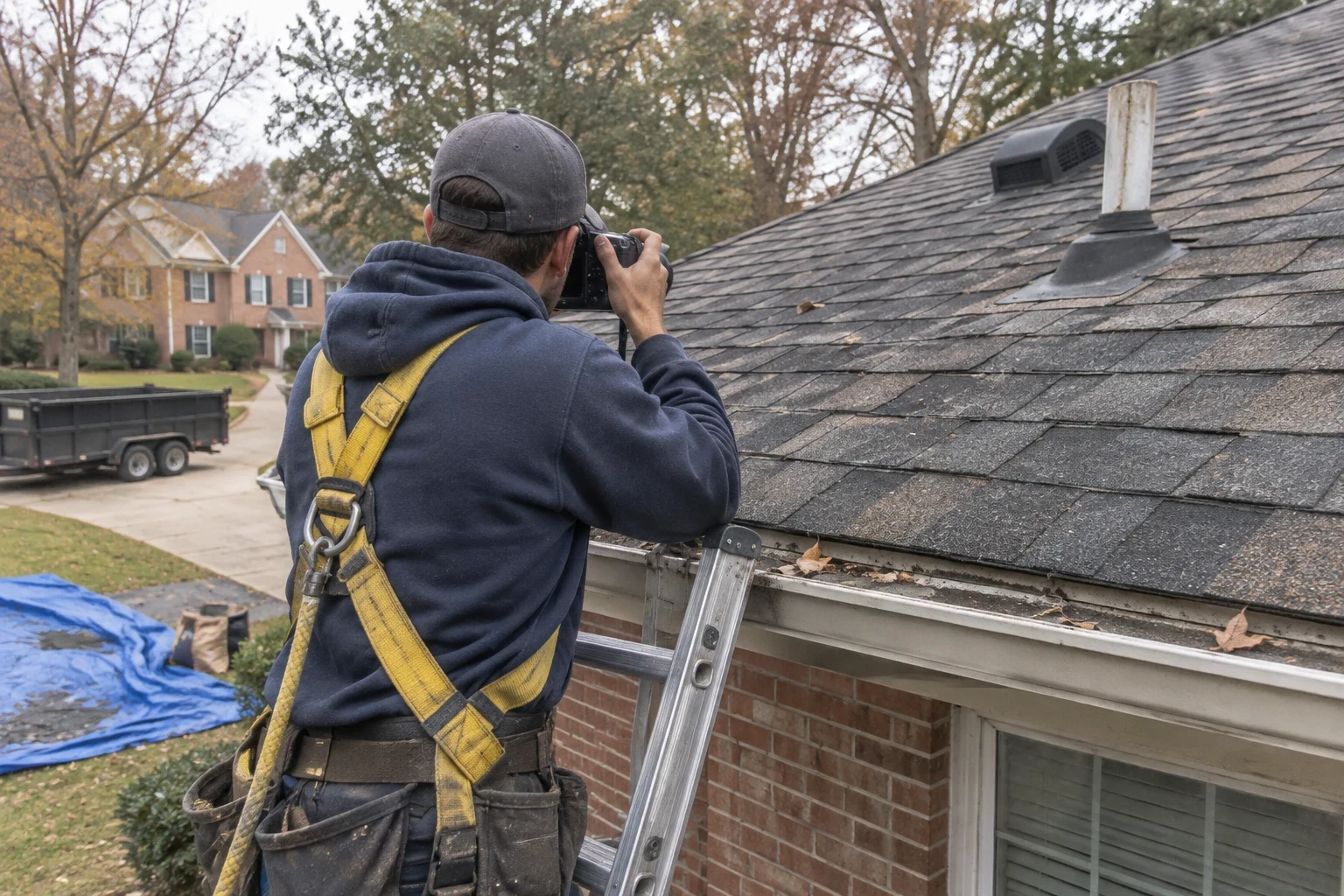
When a roof inspection is a smart next step
- Water marks showing up indoors
- A discolored patch near the top of a room deserves a look, even if it seems dry and old. Water tends to travel along rafters, so the actual entry point is often several feet from the mark.
- Shingle grit in the gutters
- Granules washing out of the downspouts mean the shingles are wearing. Some loose grit is expected in a new roof's first year or so, but steady piles from an older roof point to shingles wearing thin.
- After hail or high wind
- Lifted or creased shingles can look fine from the yard. Spring thunderstorms around central North Carolina are the usual culprit, and a close look early keeps an insurance claim simple.
- Dark streaks, moss or debris piles
- Moss and pine needle buildup hold moisture against the roof. Streaks are often cosmetic, but we'll tell you honestly which is which.
- You're buying, selling or the roof is past 15 years
- A general home inspection rarely includes a close roof check. Knowing the real condition helps you plan or negotiate.
How your inspection goes
- 1
Set a time by phone
Tell us what you've noticed, if anything, and we'll pick a time that works. You don't need to be home for the roof itself, though we'll need access if you'd like the attic checked.
- 2
Roof and exterior check
We walk the roof when it's safe to do so and photograph shingles, flashing, vents, valleys and the gutter line. On steep or fragile roofs we use careful footing and close-up photos rather than risk damage.
- 3
Looking inside the attic
If you're comfortable with it, we climb through the hatch and look for moisture, daylight and airflow problems. A drop cloth goes down beneath the opening first, and everything is left the way we found it.
- 4
Walk through the photo report
We go over each photo with you and answer questions. If repairs make sense, we'll explain the options, and if nothing needs doing, we'll say so.
What the inspection costs, and what shapes any repair price
There is no charge for the inspection or the photo report. If we do find work that needs doing, the price comes down to a few things we'll point out in the photos, and you'll have a written estimate in hand before anything goes on the calendar. If a bigger job turns up, financing is available through Acorn Finance.
- What's underneath
- Swapping a cracked pipe boot is a small job. If the decking below it has gone soft or rotten, the repair needs more wood and more labor, and we can only confirm that once the shingles are lifted.
- Roof pitch and access
- A steep pitch, or a section boxed in by trees or a later addition, means slower work and extra safety gear on the roof.
- Matching materials
- Older or discontinued shingles can be hard to find, which changes both the cost and how well the patch blends in.
- Repair or replace
- When problems show up across the whole roof, patching may stop being the better value. We'll show you the photos that explain why, and the choice stays with you.
Roof inspection questions
- Is the inspection really free?
- Yes. You pay nothing for the inspection or the photo report, and you're under no obligation to hire us for anything afterward. Good information is useful to you whoever ends up doing the work.
- How long does it take?
- Plan on about an hour for most homes, a little longer for a large roof or when we go into the attic. We'll review the photos with you before we leave, or by phone later if that suits you better.
- Will you just try to sell me a new roof?
- No. Plenty of roofs need a small repair, a new pipe boot or nothing at all. The photos show you the real condition, and if replacement does come up, the reasons will be right there in front of you.
- I think a storm damaged my roof. What should I do first?
- Start with an inspection so the damage is documented with clear photos. From there, we can be at the meeting with your insurance adjuster and help you through each step of the claim. Our storm damage repair page covers what happens once damage is confirmed.
- How regularly is a roof check worth scheduling?
- For most homes, once every one to two years works well, with an extra visit after any serious hail or wind. Roofs past their middle years benefit from a closer eye, since aging materials let small problems pile up more quickly.
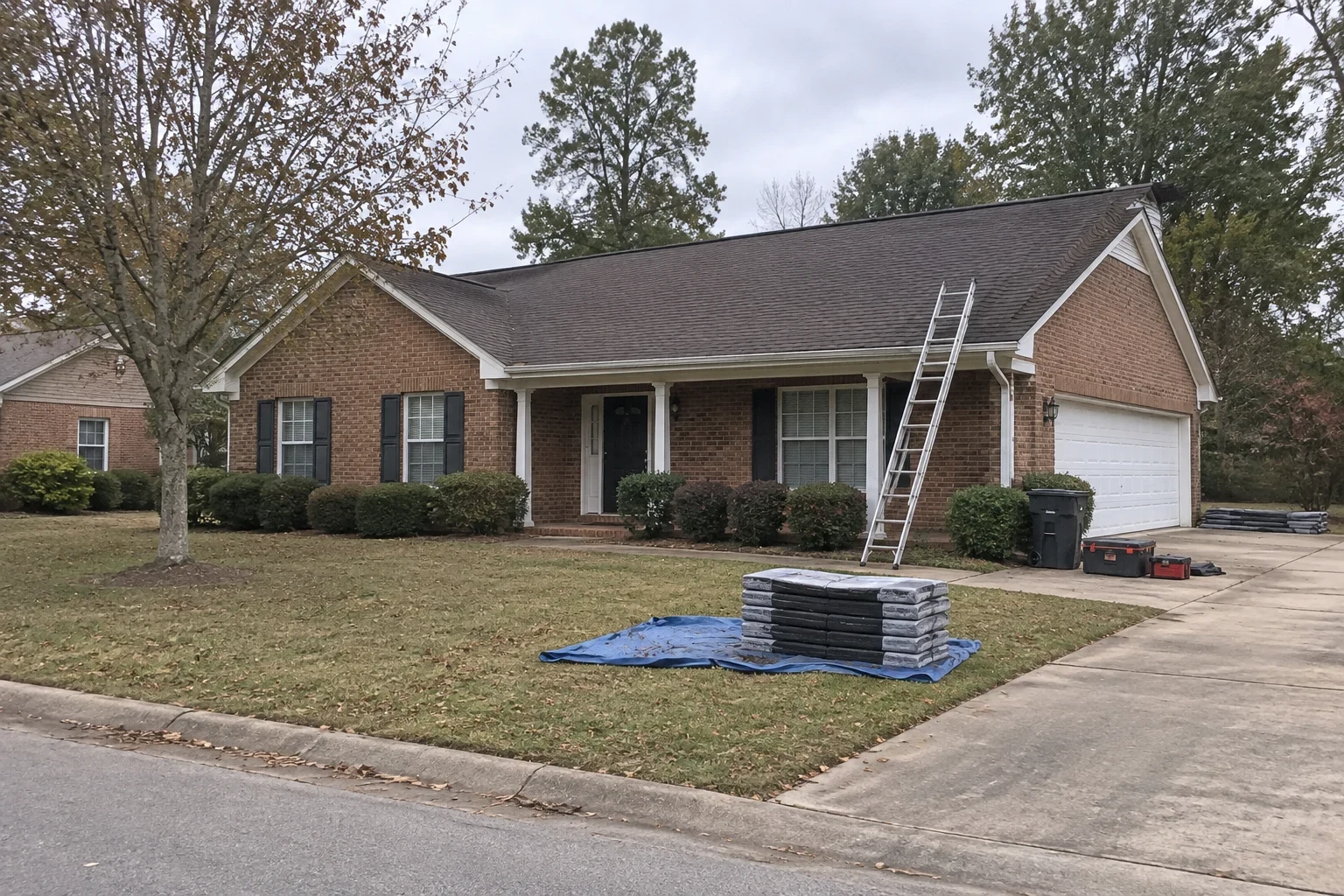
See what's really on your roof
A free inspection gives you clear photos and a straight answer about your roof's condition. We serve Pittsboro and nearby towns like Briar Chapel, Fearrington Village and Siler City.