ServicesStorm Damage Repair
Storm Damage Repair in Pittsboro
When wind lifts shingles or hail bruises them, the damage is often invisible from the yard. We get on your roof, photograph every problem we find and repair it with matched materials and proper sealing, so the fix holds through the next storm instead of just this one.
What storm damage repair covers
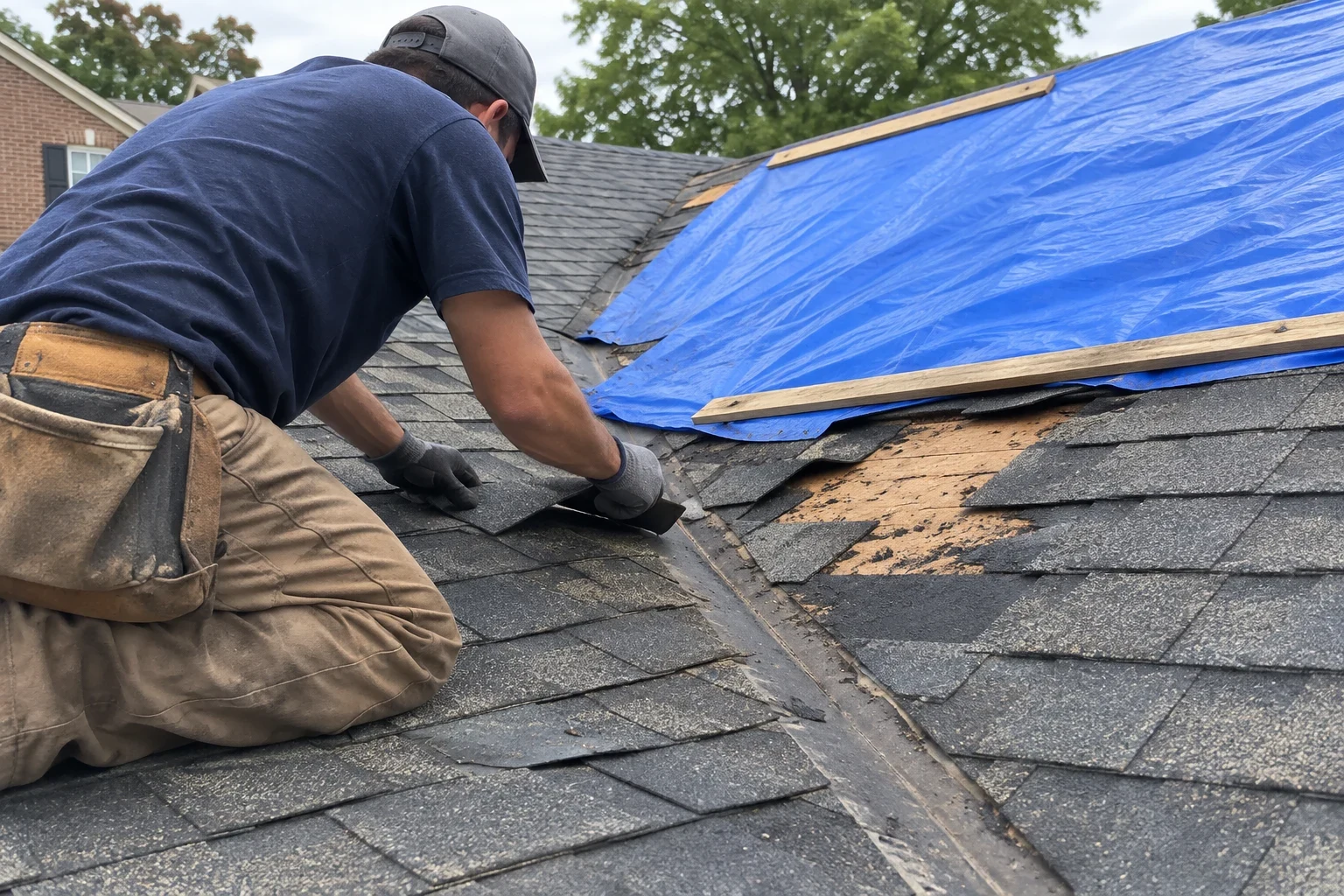
Storm damage repair means finding what hail, high wind or a falling limb did to your roof and fixing it before small openings turn into soft decking or a stained ceiling. Around central North Carolina that usually follows spring hail, summer thunderstorms or the tail end of a tropical system in late summer.
Most of what fails after a storm is small. A shingle lifts and loses its seal, a nail backs out, a pipe boot cracks, or step flashing bends away from a wall. Those details decide whether a repair lasts, so we treat them as the job itself, not something to rush through at the end.
If the damage is spread across the whole roof, we will tell you plainly that roof replacement makes more sense, and we will show you the photos that led us there.
What we check and fix
- 01
A free inspection with a photo report
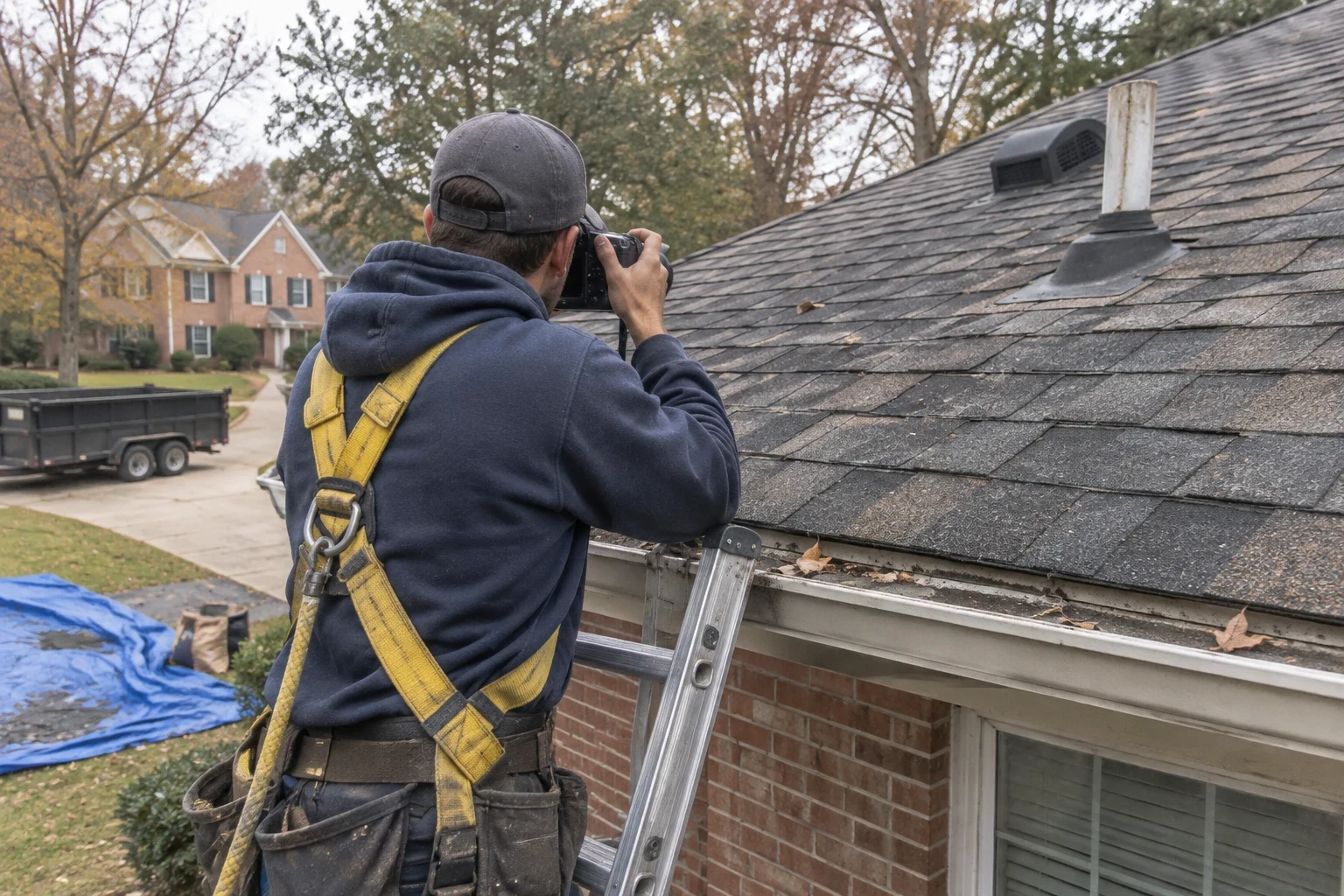
We walk every slope and photograph hail hits, creased or missing shingles, damaged vents and loose flashing. You get a photo report of what we found, so you can see your roof the way we saw it.
- 02
Replacing wind-creased shingles
A shingle that folded back in the wind usually has a crease across it and a broken seal strip. Gluing it back down rarely lasts. We replace creased shingles, hand-seal the course where it needs it and nail to the manufacturer's pattern.
- 03
Flashing, vents and pipe boots
Hail splits plastic vents and rubber pipe boots, and wind pulls flashing loose at chimneys and walls. We replace damaged pieces and lap new flashing in the right order, so water runs over each layer instead of behind it.
- 04
Matching what is already on your home
We match shingle style and color as closely as current products allow. If your shingle has been discontinued, we tell you before any work starts and talk through the options.
- 05
Gutter and siding damage
Hail that bruises shingles often dents gutters and cracks siding on the same pass. We look at both while we are there, and you can read more about that work on our Gutters and Siding pages.
- 06
Support through the claim
Your adjuster gets a guided tour of the roof from us, with the photos in hand to point out each damaged area. Coverage is your insurance company's call. Our job is to see that every bit of real damage is on the table.
Questions about Storm Damage Repair?
Call(919) 980-9943Signs the last storm hurt your roof
Granules at the downspouts
A pile of sandy granules after a storm means hail or wind scrubbed the shingle surface. Bare spots age quickly in summer sun.
Shingles or tabs in the yard
Even one missing shingle leaves the underlayment and nail holes open to rain.
Dents on metal
Dings in gutters, vent caps or the top of your AC unit are an easy clue that hail was large enough to bruise shingles as well.
A new ceiling stain or attic drip
Water can travel along rafters before it shows, so the leak is often several feet from where the stain appears.
A limb hit the roof
Heavy oak and pine limbs can crack shingles and dent the decking underneath, even when the branch only seemed to brush the roof.
How a storm repair goes
- 1
You tell us what happened
Let us know when the storm came through and what you noticed. We set a time for a free inspection. You are welcome to walk the property with us, but you do not need to be home for the outside check.
- 2
Inspection and photo report
We check every slope, the flashing, the vents and the attic if we can reach it. Then we send you the photos with plain notes on what each one shows and whether it calls for repair or replacement.
- 3
Claim and written estimate
If you file a claim, we meet your adjuster and walk through the damage together. You get a written estimate that lists each repair line by line.
- 4
Repair day
We cover shrubs and the AC unit, remove damaged material, check the decking for soft spots and replace any that are bad. New underlayment, flashing and shingles go on in the proper order. Before we leave, we sweep the lawn, beds and driveway with a magnetic roller to pick up stray nails.
- 5
Final photos
Before packing up, we take pictures of the completed repair. Those images are yours to keep, and they come in handy if your insurer asks for proof the work was done.
What shapes the cost of a storm repair
Every storm leaves its own pattern of damage, so we only price the work after we have been on your roof and photographed what is there. When a claim is involved, your policy and deductible set what you pay yourself. For homeowners covering the repair directly, we offer financing through Acorn Finance.
- Spread of the damage
- A few damaged shingles on one slope keep the job small. When hail marks turn up on every side of the house, the conversation usually moves toward replacement.
- The condition of the decking
- Once water has soaked into the plywood or boards, the soft sections have to be cut out and replaced before any new shingles can go down.
- Flashing and accessories
- Damaged chimney flashing, skylight curbs, vents and pipe boots each add parts and labor to the repair.
- Pitch, height and shingle match
- Steep or tall roofs take more safety setup. A discontinued shingle can also widen the area we need to redo so the color stays consistent.
Questions homeowners ask after a storm
Do I file a claim before or after someone looks at the roof?
We recommend the inspection come first. Our photo report shows whether there is real damage worth claiming, which can keep you from filing one you do not need. If the damage is there, you contact your insurer with the photos already in hand.
Will you meet with my adjuster?
Yes. We meet adjusters on the roof, point out the damage we documented and answer their questions. We help you through the claim process, though the coverage decision always belongs to the insurance company.
Is a repair enough, or am I looking at a whole new roof?
A lot of storm damage is limited to a few spots and can be fixed cleanly. When most slopes took hits, or the shingles were already near the end of their life, a full roof replacement usually holds up better. We go over the photos with you and tell you which option we would pick and why.
What if new shingles do not match my old ones?
Before the job starts, we find the closest style and color available. Weathered shingles will look a little different from new ones at first, and we say so up front. If your product has been discontinued, we talk through the options with you and your adjuster.
How soon after a storm should I get my roof checked?
Sooner is better, ideally before the next heavy rain finds the opening. Insurance policies also set deadlines for reporting damage, so it is worth checking yours. A free inspection takes the guessing out of it.
Get a clear look at your roof after the storm
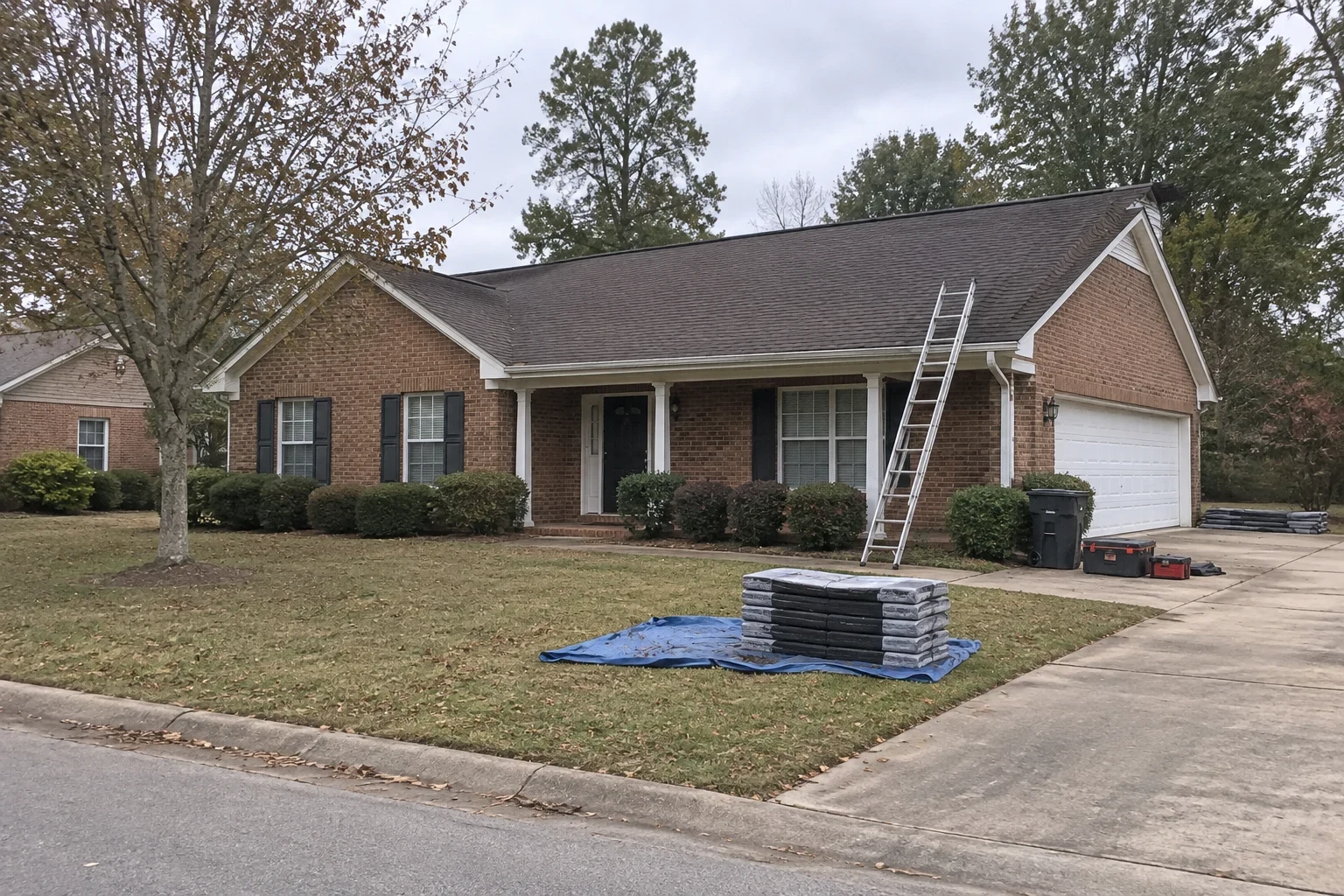
We will climb up at no charge, check every slope and send you a photo report showing each spot that needs work. You can look it over at your own pace, and nobody will push you to decide that day.