ServicesCommercial Roofing
Commercial Roofing in Pittsboro, NC
We repair and replace flat and low-slope roofs on shops, offices, churches and small warehouses. Our work focuses on the seams, edges, drains and unit curbs where most commercial leaks begin. It starts with a free inspection and a photo report of exactly what we found.
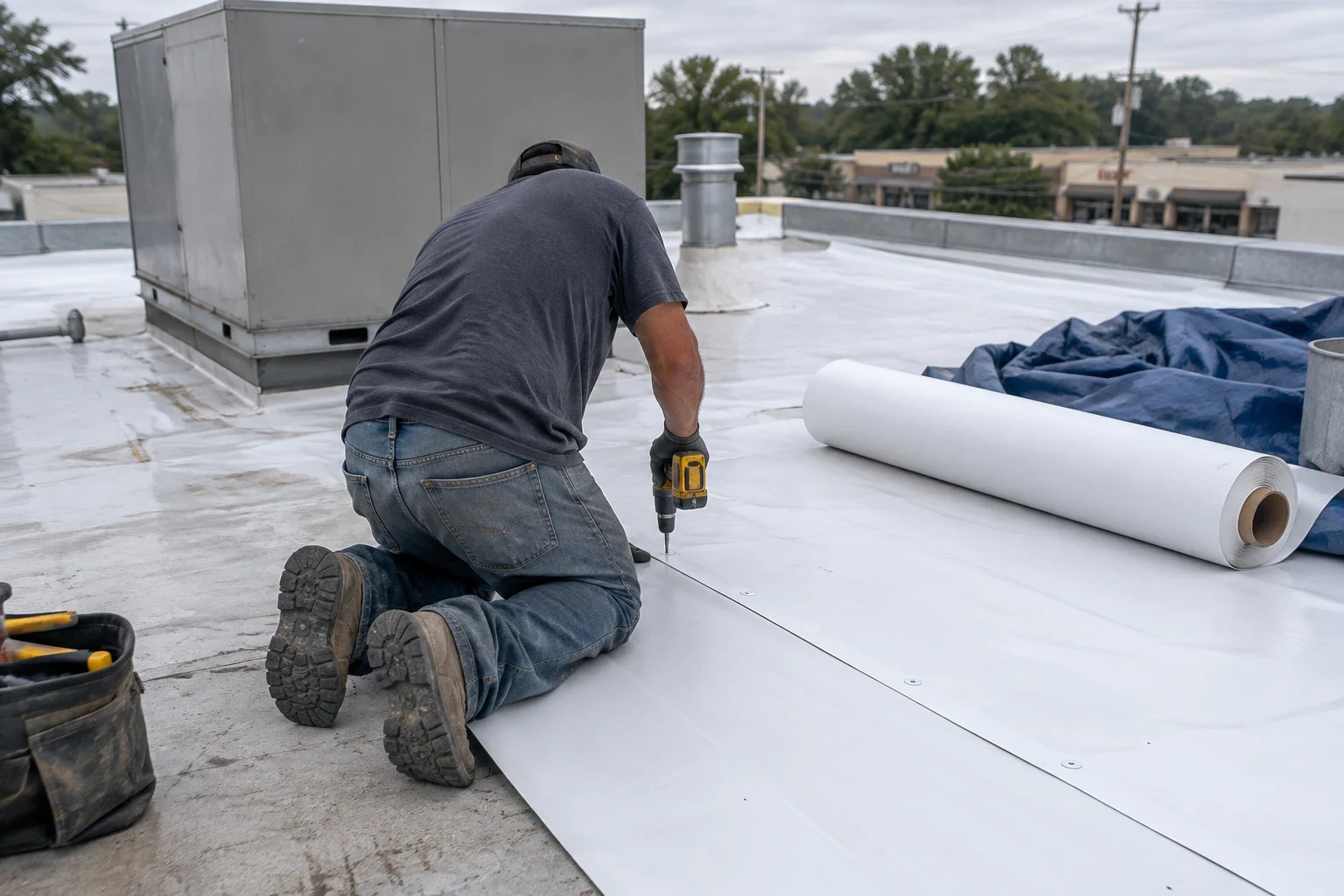
Most commercial leaks start at the details
A low-slope roof rarely fails in the middle of a wide, flat field of membrane. It fails where something interrupts it: a seam that was never fully welded, a pipe boot that shrank in the sun, a parapet wall where the flashing pulled away, or a drain that sits a little higher than the roof around it. Those spots are where we spend our time.
We work on existing commercial buildings, fixing what is leaking now and replacing roofs that have reached the end of their life. Our approach is simple. Find the real source of the water, show you photos of it, and then fix it so the repair outlasts the next summer of heat and hard thunderstorms.
If you own or manage a small building in Pittsboro, Siler City, Sanford or nearby, you get one crew that walks the roof, explains the findings in plain words and does the work without disrupting your customers.
What our commercial roofing work covers
- Leak tracing on low-slope roofs
- On a low-slope roof, water often travels sideways under the membrane and shows up inside well away from where it entered. We follow that path back to the true entry point instead of patching whatever sits above the stain.
- Seam and flashing repair
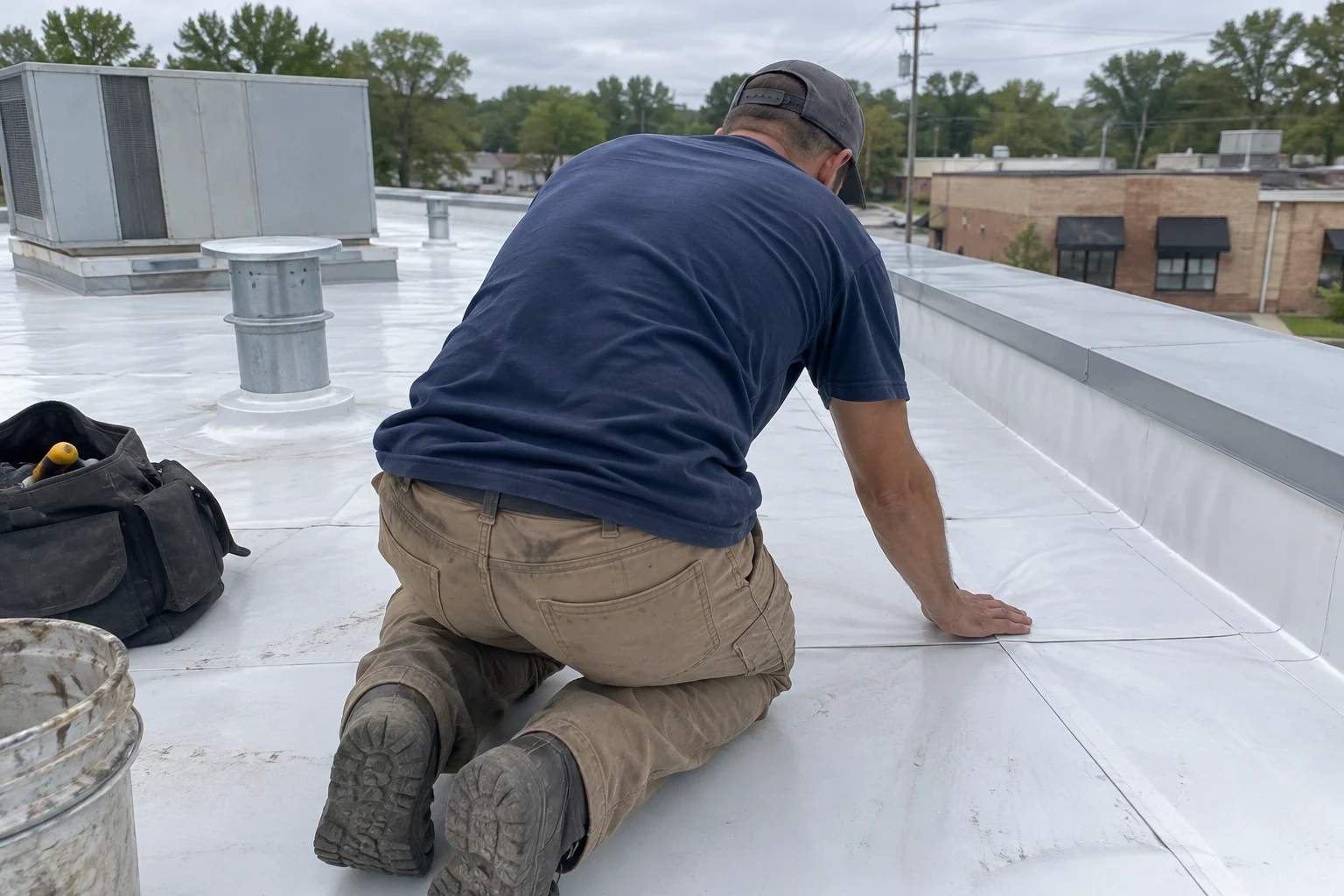
- We probe every seam in the problem area and reseal or reweld the ones that have opened. At walls, curbs and edges we replace worn flashing and fasten it with proper termination bars, not just a bead of caulk.
- Rooftop unit and penetration details
- HVAC curbs, vent pipes and conduit are frequent leak points. We rebuild the flashing around them and, where water backs up behind a unit, talk with you about adding a cricket to steer it toward a drain.
- Drains, scuppers and gutters
- We clear and reset drains, check that scuppers are sized and sealed correctly, and fix the gutters and downspouts that carry water off the building. Our Gutters page covers that work in more detail.
- Membrane roof replacement
- Once patching is just buying a few more months, a full replacement is the better spend. We strip the old system down to the deck, swap out any wet insulation or soft decking, and lay a new membrane with close attention to every edge and transition.
- Metal roof repair
- On metal roofs we replace backed-out or rusted fasteners, reseal laps and repair the trim where wind tends to work under the panels.
Signs your commercial roof needs attention
Water still standing two days after rain
Ponding that lingers puts constant weight and wear on the membrane. It usually points to a sagging deck, a clogged drain or a drain set too high.
Stained ceiling tiles
Discolored tiles in a suspended ceiling are frequently the earliest warning anyone notices indoors. When the stain appears, the insulation overhead may already be wet.
Seams lifting or blisters forming
Open seam edges and soft bubbles in the membrane let water in slowly. They are much cheaper to fix early than after a season of freeze and thaw.
Cracked sealant around rooftop units
Summer heat dries out sealants fast. Gaps around curbs and pipes are among the most common sources of commercial leaks we find.
Rust streaks or loose fasteners on metal
Rust trails below screws or panels that rattle in the wind mean the fasteners are failing and water has a path in.
What moves the cost of commercial roofing
Every building prices differently, so we hold off on numbers until we have walked the roof and checked what lies beneath the membrane. Your estimate breaks the job into its parts so you can see where the money goes. If the tear-off reveals a problem that was hidden at the inspection, the work pauses while we photograph it and go over your options together, and nothing extra happens without your okay.
Roof size and penetrations
Square footage is only part of it. Every unit curb, vent stack and drain needs its own flashing work, and getting those details right takes time.
Condition of the insulation and deck
Soaked insulation has to come out, and soft decking gets replaced before the new roof goes on. We test for moisture during the inspection so this comes to light early, not halfway through the job.
Membrane and system choice
Membrane types and insulation thicknesses differ in material cost. We explain the trade-offs based on your building and how it is used.
Access and working hours
Tight access, tall parapet walls or working around your open hours can change how we stage the job and how long the crew is on site. When a permit is required, that is part of the cost too.
How a commercial roofing job runs
- 1
A phone call and a free inspection
Once you reach us by phone, we pick a time that suits you to walk the roof. We look at the membrane, seams, flashing and drains, and check the ceiling below if you can let us inside.
- 2
Your photo report
We send photos of what we found, marked so you can see each problem. You get an honest answer on whether repair will do the job or replacement is the better spend.
- 3
A written estimate and a schedule
The estimate lists the work line by line. We plan the job around your business hours, keep materials and equipment clear of your entrances, and pull the permit when the work calls for one.
- 4
The work and a final walk
During a replacement, each day's tear-off is sized so the crew can have it covered with new roofing before they leave, which means the building is watertight every night. We clean up the site, walk the finished roof with you, and send closing photos of the completed details.
Commercial roofing questions
Can you work on our roof while the business stays open?
In most cases, yes. We set up staging away from the doors your customers use, try to schedule the loudest tear-off for the hours you choose, and seal each section before we leave for the day. We go over your schedule with you before work begins.
How do I know if we need a repair or a whole new roof?
It comes down to how much of the roof is still sound. When the trouble is limited to a handful of seams, flashings or drains and the insulation is dry, repair usually makes sense. When wet insulation or open seams run across large areas, we will show you the photos and explain why a replacement is the better investment.
Our building took a hit in a storm. Will you deal with the insurance company?
We will meet your adjuster on the roof and stay with you through each step of the claim. Our role is to photograph the damage and point it out in person, and the coverage decision stays with your insurer. The Storm Damage Repair page has more on how that works.
Can a new membrane go over the old roof?
Sometimes, when the existing roof and insulation are dry and code allows one more layer. Laying a new membrane over wet insulation traps the moisture and shortens the new roof's life, so we check first before suggesting it.
How often should a commercial roof be checked?
For most low-slope roofs, two visits a year works well, one in spring and one in fall, plus a look after any severe storm. Keeping drains clear and catching small seam or sealant issues early is the least expensive way to make the roof last.
Let us take a close look at your building's roof
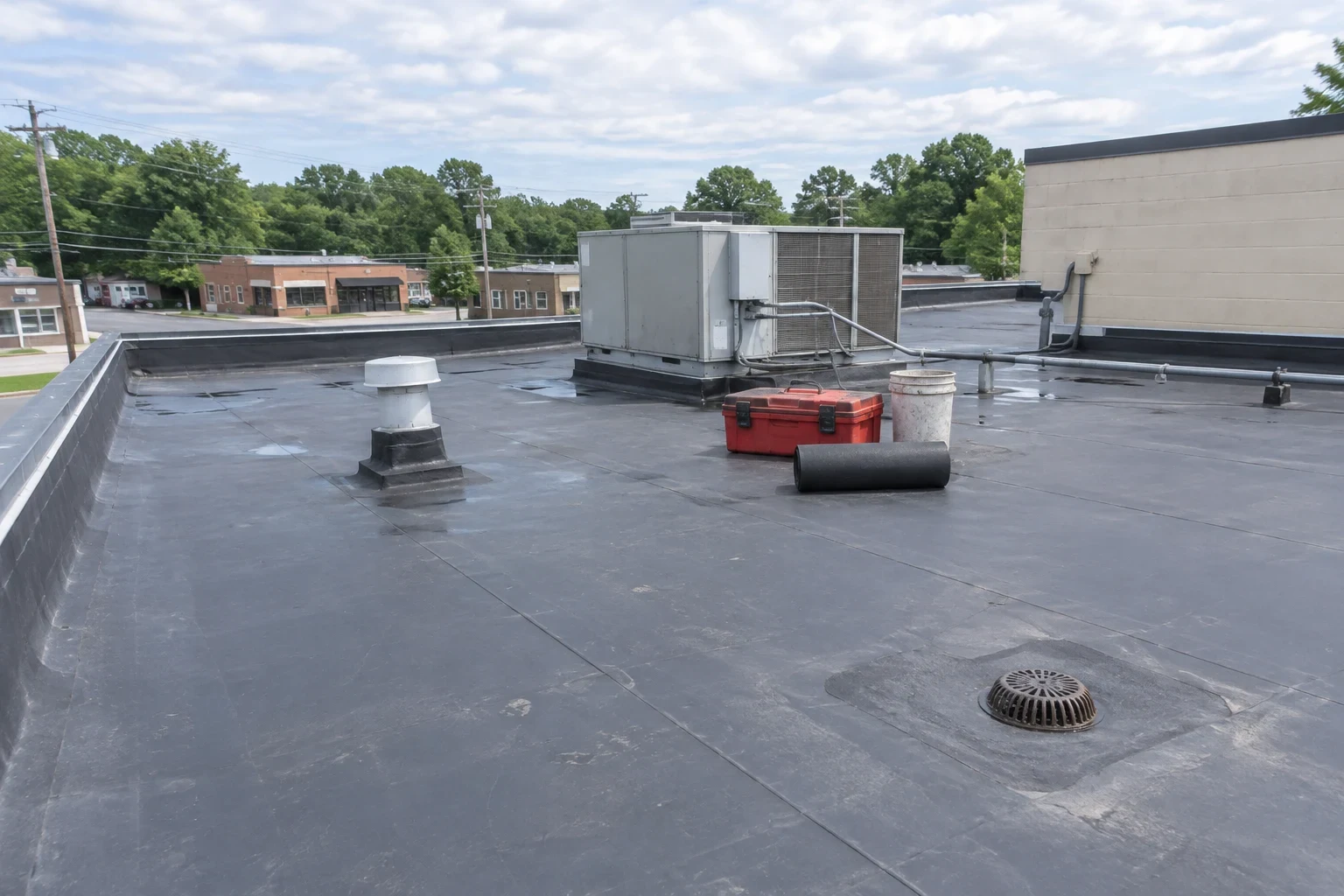
We will get up on the roof, look over the seams, drains and flashing, and put together a photo report so you can see each problem for yourself. There is no charge for the inspection, and the next step is your call.